
Expert Public Adjuster for Wind Storm & Tree Fall Damage in PA
24/7 storm claim help for hail, wind, ice, lightning, and fallen tree property damage across Pennsylvania.
REEM Public Adjustment documents roof damage, water intrusion, structural impact, and hidden storm-related loss so the carrier cannot minimize what your policy should pay.
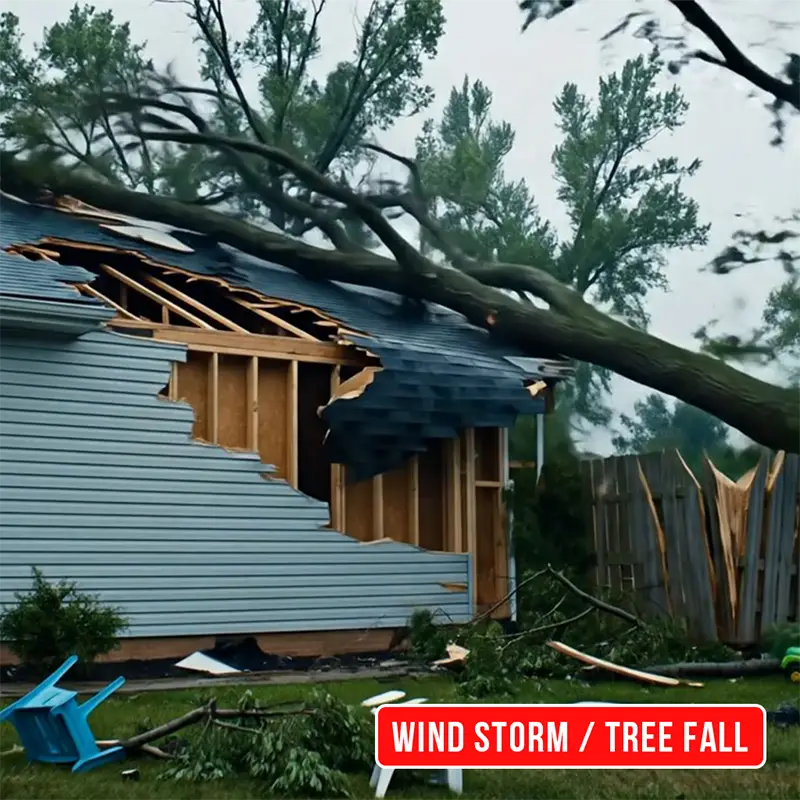
Common Causes of Wind, Hail, and Tree Fall Damage
Windstorms are among the most destructive natural events affecting residential and commercial properties. High winds can rip shingles from roofs, break windows, damage siding, collapse fences, and even compromise the structural integrity of a building. When combined with flying debris, the impact becomes even more severe.
Tree fall damage is especially common during storms. Strong winds, saturated soil, snow accumulation, or lightning strikes can cause trees or large branches to fall onto homes, garages, vehicles, or power lines.
Hidden Roof, Siding, and Structural Damage
Additionally, snow, sleet, hail, ice, and lightning can worsen the situation. Ice dams may form on roofs, forcing water into the attic. Hail can dent roofing materials and siding. Lightning strikes can cause fires or severe electrical system damage.
Immediate Attention Required
Each of these situations requires immediate attention and accurate documentation for insurance purposes.
Why Storm and Tree Fall Claims Get Underpaid
Most property owners assume that once they report damage, their insurance company will fairly assess the loss. Unfortunately, the reality is often more complicated.
Professional Bias
Insurance adjusters represent the company's interests, not the policyholder's. Policies are filled with technical language and exclusions.
Common Claim Pitfalls
- Underpaid Settlements
- Partial Denials
- Hidden Structural Damage
Delayed Results
Claims are often settled without accounting for hidden damage, such as insulation issues or water infiltration, leaving the owner to bear the cost later.
"Professional mediation and representation are essential."
How We Handle Your Wind and Tree Fall Insurance Claim
At REEM Public Adjustment, we act as a dedicated advocate for property owners. Our mission is to ensure that every client receives their rightful and full compensation under their insurance policy.
Our Commitment
"Our process is thorough, transparent, and client-focused. We stand between the insurance company and the policyholder to ensure fairness. We understand that behind every claim is a family, a business, and a financial investment that deserves protection."
Our Proven 5-Step Storm Claim Process
Damage Inspection
Comprehensive property inspections to identify visible and hidden damage with professional documentation.
Loss Evaluation
Detailed, itemized evaluation of repair and replacement costs, including materials and code upgrades.
Policy Review
Deep analysis of deductibles, exclusions, and endorsements to ensure no benefit is overlooked.
Claim Preparation
Professional organization and presentation of evidence to significantly strengthen the claim submission.
Direct Negotiation
Effective mediation of disputes to secure the maximum compensation allowed under your policy.
Why a Wind Storm Damage Adjuster PA Property Owners Trust Matters
After a severe storm, handling complex insurance negotiations while dealing with personal stress can be overwhelming. Professional public adjusters bring several advantages:
- Expertise in construction and repair costs
- Deep knowledge of insurance policy language
- Skilled negotiation with insurance carriers
- Protection against underpayment
Common Issues in Wind & Tree Fall Claims
Insurance companies may argue that damage is cosmetic rather than structural. They may apply depreciation aggressively, reducing the payout.
- Wind vs. Wear and Tear disputes
- Pre-existing condition claims
- Partial repair vs. Full roof replacement
- Code upgrade coverage matches
Storm Damage Claim Resources
Residential
See our broader claim category page if you need help comparing hail, wind, or other covered property losses.
Commercial
If the storm also caused fire, smoke, or electrical issues, review our related service page for combined-loss support.